
Description
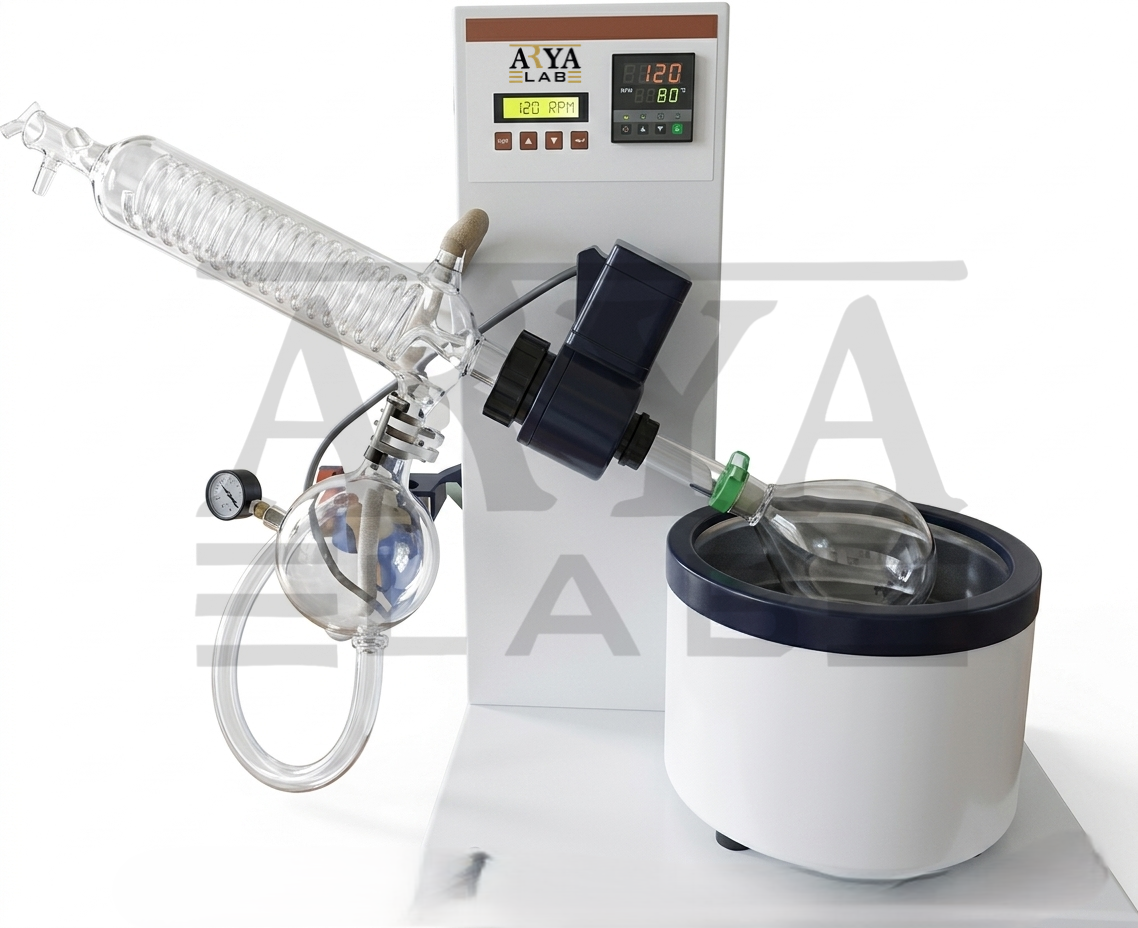
The Rotary Evaporator (Rotavap) is an advanced laboratory instrument used for the efficient and gentle removal of solvents from samples through evaporation under reduced pressure (vacuum). It is widely used in chemical, pharmaceutical, biotechnology, and research laboratories for processes such as concentration, purification, and solvent recovery. The instrument is especially useful for handling heat-sensitive compounds, as it allows evaporation at lower temperatures, preventing thermal degradation of valuable samples.
The system works by rotating a round-bottom flask containing the sample, which increases the surface area of the liquid and speeds up evaporation. The flask is partially immersed in a temperature-controlled water or oil bath, ensuring uniform heating. The evaporated solvent is then condensed in a cooling system and collected separately for reuse or disposal. The combination of rotation, vacuum, and controlled heating ensures fast, efficient, and safe solvent removal.
Rotary evaporators are designed with precise control systems for temperature, rotation speed, and vacuum level, allowing accurate and reproducible results. Their robust construction, ease of operation, and high efficiency make them essential in modern laboratories.
Key Features
• Efficient solvent evaporation under vacuum conditions
• Rotation increases surface area for faster evaporation
• Temperature-controlled heating bath for uniform heating
• Condenser system for effective solvent recovery
• Suitable for heat-sensitive and volatile compounds
• Precise control of speed, temperature, and vacuum
• Safe, reliable, and user-friendly operation
Applications
• Solvent removal and sample concentration
• Chemical synthesis and purification
• Pharmaceutical and drug development research
• Extraction and distillation processes
• Biotechnology and analytical laboratories
The Rotary Evaporator is an essential laboratory instrument that provides fast, safe, and efficient solvent evaporation, ensuring high-quality sample preparation and recovery in scientific and industrial applications.
Reviews
There are no reviews yet.